
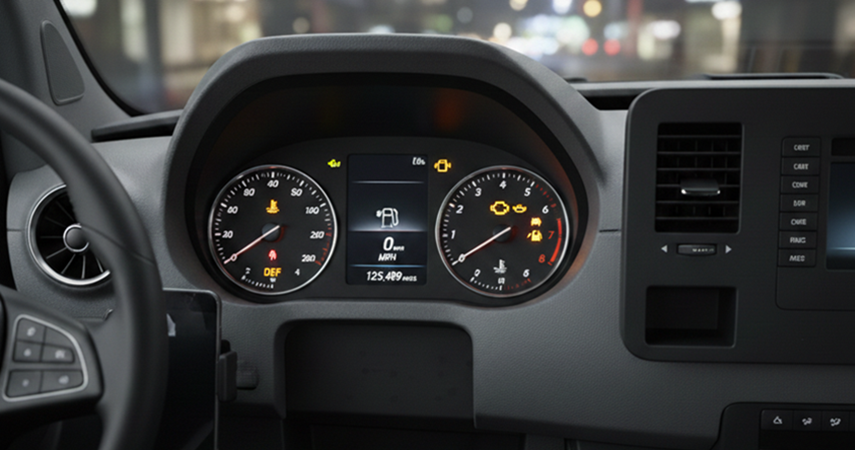
A DEF message and a check-engine light can appear at the same time, but they do not always identify the same fault. The exact dashboard wording, whether the light is steady or flashing, stored fault information, and how the van runs all matter.
Record the message before switching the ignition off. Do not clear codes or disconnect the battery just to turn off a light; that can erase useful diagnostic information without repairing the cause.
What the Warning Lights Can Mean
- Check-engine light: The engine-control system detected a condition outside its expected range. The cause may involve air, fuel, boost, temperature, sensors, wiring, misfire, or emissions equipment. A fault code identifies the detected circuit or condition; it is not automatically an instruction to replace the named component.
- DEF level message: The van may need the correct DEF added according to the owner’s information. Use sealed fluid that meets the required specification and avoid contamination. Adding DEF does not repair a sensor, heater, pump, dosing, wiring, or SCR-system fault.
- DEF or emissions malfunction: A malfunction message, countdown, or restart restriction deserves prompt diagnosis. Read the exact instructions on the display. Do not assume that highway driving or adding fluid will clear a system fault.
Why DEF and Check-Engine Warnings Appear
Low Fluid, Contamination, or Incorrect Filling
A low level can trigger a refill message. Contaminated or incorrect fluid, filling the wrong tank, or a damaged cap or filler area can create a different problem. If a warning remains after adding the specified amount, further diagnosis may be needed.
Sensors, Wiring, and Electrical Supply
The emissions system uses temperature, pressure, NOx, level, and other inputs depending on the model. A code involving a sensor does not prove the sensor itself failed. Power supply, grounds, connectors, wiring, exhaust leaks, and the conditions the sensor is reporting must also be checked.
DEF Delivery and SCR Components
The tank assembly, heater, pump, lines, dosing valve, mixer, and SCR catalyst vary by model year and configuration. Crystallized residue can be evidence of a leak or dosing concern, but visible deposits alone do not identify the failed part.
DPF and Engine-Performance Faults
Short trips, extended idling, low-speed use, or an engine fault may interfere with successful DPF regeneration. However, a DPF warning is different from a DEF-level warning. Engine temperature, soot load, pressure data, driving history, and related faults should be reviewed before a regeneration or component replacement is recommended.
What to Do When a Warning Appears
- Photograph the message and note whether the light is steady or flashing.
- Check the owner’s information for the exact warning and any restart countdown.
- Note recent DEF filling, repairs, battery problems, cold starts, reduced power, smoke, or unusual exhaust odor.
- If the engine runs severely rough, a red stop warning appears, exhaust fumes enter the cabin, or the van cannot maintain a safe speed, pull over safely and arrange assistance.
- Arrange Sprinter warning-light diagnosis when the message persists, returns, or is accompanied by reduced power.
How Sprinter Gurus Diagnoses the Concern
A useful diagnosis combines a scan of applicable control modules with visual checks and measurements. Depending on the fault, testing may include battery and charging voltage, wiring and connectors, DEF level and quality, dosing operation, exhaust leaks, temperature and pressure data, NOx sensor response, DPF condition, and engine-performance checks.
At Sprinter Gurus, our technicians explain the detected fault and the evidence supporting the recommended repair. Our only shop is at 6000 Jimmy Carter Blvd Suite 200, Norcross, GA 30071. Call us or request an appointment and tell us the exact dashboard message.