
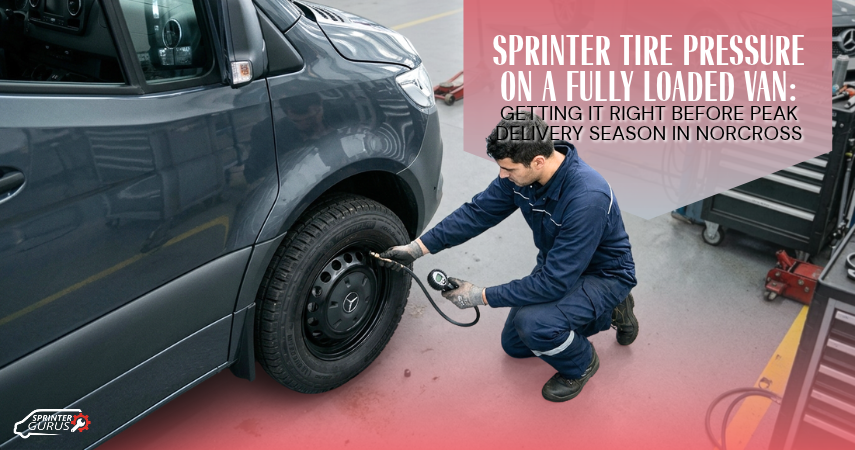
A loaded Sprinter places more demand on its tires, but the correct cold pressure still comes from the vehicle’s tire and loading information and the approved tire configuration. Do not use one fleet-wide number or the maximum molded into the tire sidewall.
Key Points
- Use the tire label and owner information for that van.
- Check pressure cold and use an accurate gauge.
- Inspect both tires on every dual-wheel position.
- Confirm the tires and loaded axle weights stay within their ratings.
- Tread wear is a clue, not a diagnosis by itself.
Where to Find the Correct Pressure
The tire and loading label is commonly located at the driver’s door opening. It identifies the approved tire size and cold pressures for the vehicle configuration. Front and rear pressures may differ. Some vehicles or upfitters provide additional load information, so follow the documents that apply to the completed van.
The tire sidewall lists tire size, construction, load and pressure markings. Its maximum pressure is not a substitute for the vehicle manufacturer’s recommendation. If a label is missing, damaged, or conflicts with the installed tires or conversion, confirm the correct specification before loading the van.
Check Pressure Before the Route
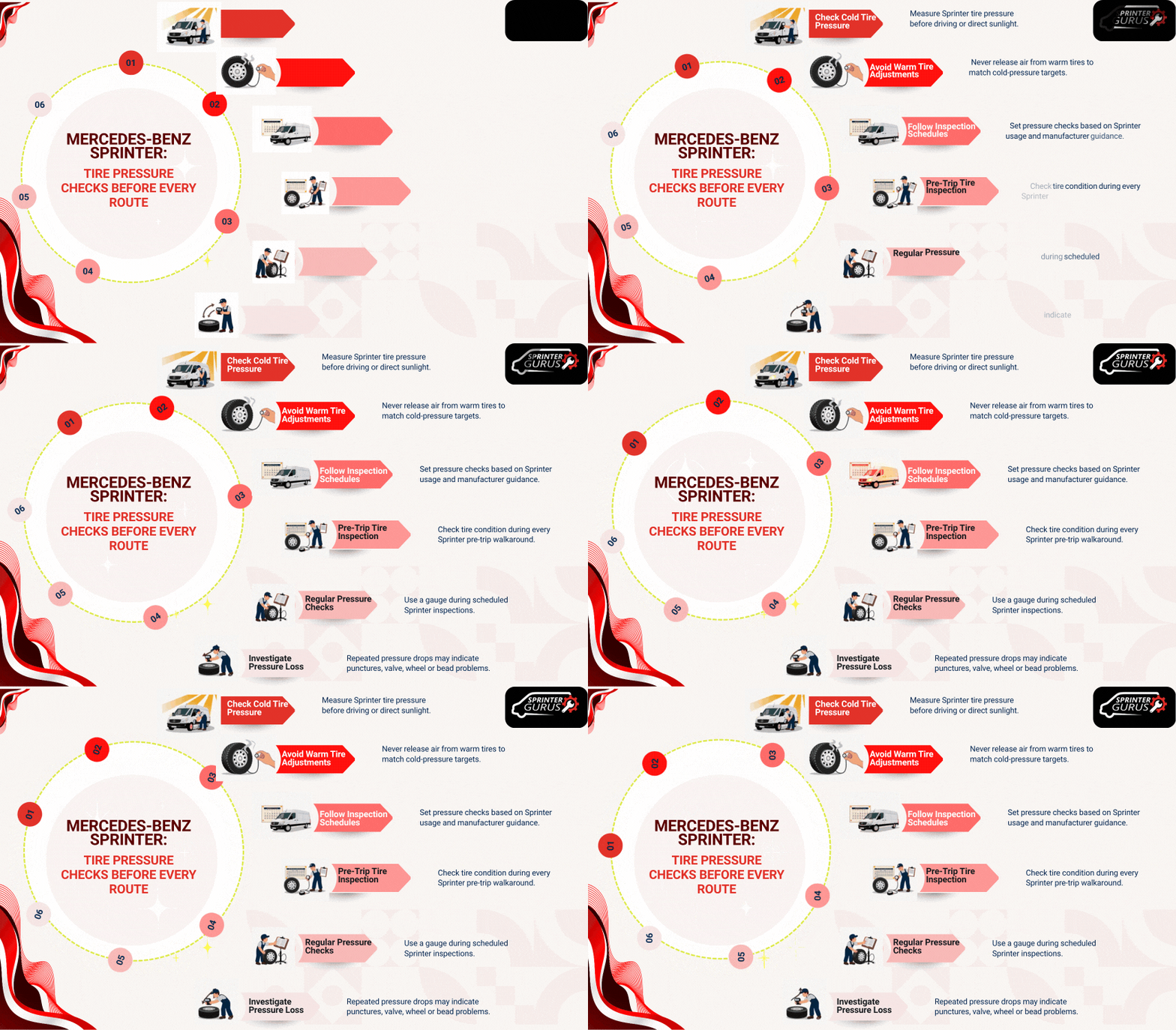
Measure pressure when the tires are cold, before significant driving or direct sun has heated them. Pressure normally rises during driving. Do not bleed a warm tire down to a cold-pressure target unless the applicable instructions tell you to do so.
Choose a check frequency based on vehicle use, manufacturer guidance, fleet policy, and how quickly the tire has been losing air. A commercial pre-trip walkaround should include visible tire condition, while scheduled gauge checks verify pressure. A tire that repeatedly loses pressure needs inspection; continued topping up can hide a puncture, valve, wheel, or bead problem.
Load and Tire Ratings Work Together
A tire must have adequate load capacity at the pressure and configuration used. The loaded van must also remain within its gross vehicle and axle ratings. Permanent shelving, tools, water tanks, lifts, batteries, refrigeration, and other equipment reduce the payload available for cargo and passengers.
When weight is uncertain, weigh the van in its normal loaded condition and compare total and axle measurements with the certification label. Correct pressure cannot make an overloaded tire, axle, or vehicle safe.
What Tread Wear Can Tell You
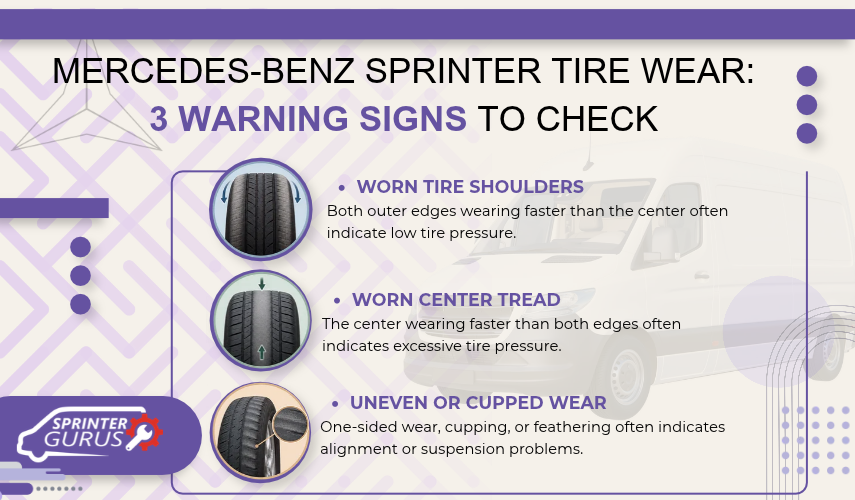
Shoulder wear, center wear, one-sided wear, cupping, feathering, flat spots, and irregular wear can help guide an inspection. Pressure history is one factor, while alignment, balance, rotation history, tire construction, suspension condition, wheel damage, braking, road surfaces, and load distribution may also matter.
Do not diagnose alignment from one wear pattern alone. Inspect all tires and compare measurements. A pressure correction or alignment cannot restore tread that is already worn below a safe condition.
Dual-Rear-Wheel Sprinters
Each tire in a dual pair must be accessible for pressure and condition checks. Matching size, approved construction, diameter, load capacity, inflation, and spacing matter. One low or damaged tire can shift more load to its partner and allow heat or contact between the tires.
Use valve hardware that permits accurate checks without damaging the stems. Inspect the inner sidewalls and the space between the duals for debris. Do not rely on kicking the tires or looking only at the outer tire.
When to Stop Driving
Do not continue normal service with exposed cords, a sidewall bulge, rapid pressure loss, severe vibration, tire-to-body contact, a damaged wheel, or a tire that has been driven flat. Reduce risk by stopping safely and arranging professional assessment. Tire-pressure monitoring warnings also deserve a gauge check and inspection rather than a reset alone.
Frequently Asked Questions
Should pressure be increased when the van is fully loaded?
Use the load-specific pressure information supplied for that van and tire configuration. Do not invent a higher number or exceed a tire, wheel, or vehicle rating.
Can tire wear prove the pressure was wrong?
Wear may suggest a pattern, but several mechanical and operating factors overlap. Pressure history, measurements, alignment and component condition should be reviewed together.
How often should a delivery fleet check pressure?
Follow the manufacturer’s guidance and a documented fleet inspection schedule. Check sooner when temperatures change sharply, loads change, a TPMS warning appears, damage is suspected, or a tire has needed air.
Sprinter Tire Service in Norcross
At Sprinter Gurus, we provide Sprinter tire inspection and service, balancing, flat assessment and wheel alignment. We can also inspect suspension concerns that contribute to irregular wear.
Our only shop is at 6000 Jimmy Carter Blvd Suite 200, Norcross, GA 30071. Request an appointment and include the van’s year, model, tire size, normal load, and the symptom you are seeing.