

A Sprinter headed toward the Blue Ridge may carry passengers, camping equipment, water, tools, or permanent conversion weight. The route adds long climbs, descents, changing weather, and limited service options. A useful pre-trip inspection follows the van’s actual configuration, tire label, maintenance history, and loaded weight.
Pre-Trip Priorities
- Check tires cold using the vehicle’s tire and loading information.
- Confirm the loaded axle weights and gross weight stay within the ratings on the certification label.
- Inspect brakes, steering and suspension before mountain travel.
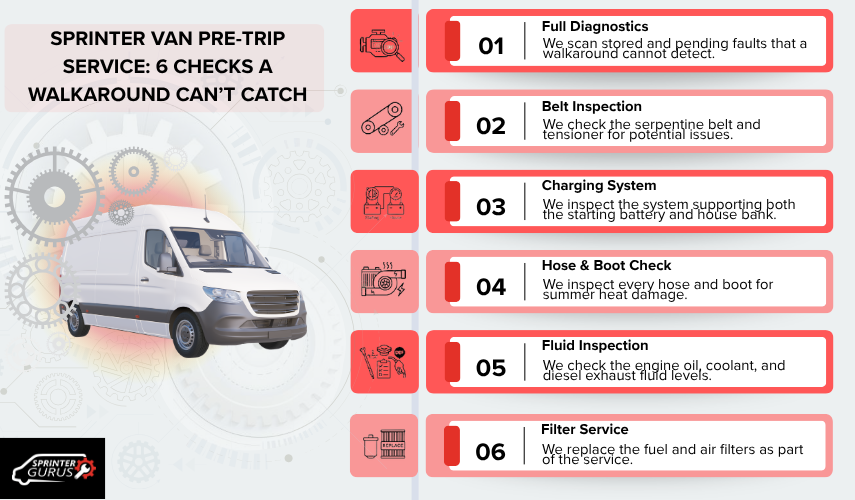
- Check coolant, belts, hoses, leaks, battery and charging performance.
- Test heat, defrost, lighting and wipers before departure.
- Review service history and current warning messages.
Tires and Loaded Weight
Use the tire and loading label and owner information for the correct cold pressure. Front and rear pressures may differ, and a single number does not fit every Sprinter, tire size, axle rating, or load condition. The maximum pressure molded on a tire sidewall is not the vehicle’s normal pressure recommendation.
Inspect tread depth, sidewalls, punctures, age, uneven wear, and valve condition. Dual-rear-wheel vans require access to both tires on each side; a visual glance at the outer tire does not confirm the inner tire’s pressure or condition. Do not release air from a warm tire just to match a cold-pressure label.
Load the van as it will travel, then use a suitable scale when weight is uncertain. Compare total and axle weights with the ratings on that specific van’s certification label. Conversion equipment changes available payload. Secure heavy items low and within the converter’s load guidance, and keep emergency equipment accessible.
Brakes, Steering, and Suspension
Mountain descents increase brake demand. Inspect pad and rotor condition, hoses, warning messages, parking brake operation, and brake-fluid history. Brake-fluid service should follow the maintenance information for the model and operating conditions; one interval should not be applied to every Sprinter without verification.
A pull, vibration, clunk, uneven ride height, leaking damper, or abnormal tire wear deserves diagnosis before the trip. Permanent conversion weight can affect ride height and handling, but it does not prove that springs, shocks, or alignment settings are wrong. Inspect and measure before replacing parts.
Use a lower gear or the vehicle’s approved downhill-driving strategy to control speed on long descents. Brakes can overheat if used continuously. Follow the owner’s instructions for the transmission and driver-assistance systems fitted to the van.
Cooling, Belts, and Fluids
Check coolant level only when the engine is cool. Inspect for leaks, damaged hoses, belt condition, tensioner or pulley noise, and debris that restricts airflow. Verify coolant type and freeze protection using the applicable specification and test method. A temperature warning, repeated coolant loss, or previous overheating needs diagnosis before travel.
Review engine-oil, fuel-filter, transmission, brake-fluid, coolant, DEF, and other service history using the maintenance information for the exact engine and model year. A universal mileage or calendar interval can be wrong for a particular configuration.
Battery, Charging, and Conversion Equipment
Test the starter battery and charging system if cranking is slow, warning messages appear, or the battery has needed a jump. Camper house batteries, solar equipment, inverters, refrigerators, heaters, lifts, and other accessories may use separate circuits that require their own inspection. A healthy starter battery does not confirm that an auxiliary system is safe or fully charged.
Visibility, Climate, and Safety Equipment
Test the heater, defroster, wipers, washer fluid, exterior lights, mirrors, and any rear climate equipment. Use washer fluid rated for the expected temperature. Check weather and road restrictions before departure, and carry route-appropriate emergency supplies, warm clothing, medications, water, lighting, communication power, and approved traction equipment when conditions may require it.
If the van carries propane, fuel, or combustion heating equipment, follow the converter and equipment manufacturer’s ventilation and inspection instructions. Confirm smoke and carbon-monoxide alarms in occupied campers.
Frequently Asked Questions
What tire pressure should a loaded Sprinter use?
Use the cold pressures specified for the vehicle, tires, and load in the tire label and owner information. Do not copy a number from another Sprinter.
How do I know whether the conversion is overloaded?
Weigh the loaded van and, when possible, each axle. Compare the measurements with the gross vehicle and axle ratings on that van’s certification label.
Does a pre-trip inspection guarantee there will be no breakdown?
No inspection can guarantee a trip without a failure. It can identify visible wear, overdue maintenance, warning messages, leaks, and testable faults before the van leaves.
Sprinter Pre-Trip Inspection in Norcross
At Sprinter Gurus, our technicians can inspect the tires, brakes, steering, suspension, cooling, charging, warning systems, and maintenance history relevant to your route and load.
Our only shop is at 6000 Jimmy Carter Blvd Suite 200, Norcross, GA 30071. Call us or request an appointment and describe the destination, load, and conversion equipment.